

As Europe’s cities embrace electric mobility, questions of digital sovereignty are reaching the heart of Scandinavia. Recent findings in Norway reveal that hundreds of public buses sourced from a major Chinese manufacturer could be remotely disabled from overseas—a wake-up call for transport authorities and policy makers across the region.

Hidden Connections Across Borders
The issue emerged during a confidential audit by Ruter, Norway’s leading public transport operator. In a rigorously controlled facility, Ruter’s team discovered that several Yutong-manufactured electric buses—part of a rapidly expanding fleet—contained Romanian SIM cards hidden within their control systems. These SIM cards, intended to facilitate remote software updates and technical troubleshooting, also connected the buses to external networks outside of Norway’s direct oversight.
This connectivity raised alarms among cybersecurity analysts. While no evidence of hostile interference or data breaches has been found, the presence of these SIM cards means that software commands could—in theory—allow the buses to be rendered inoperable from abroad.
Stronger Safeguards and Policy Response
Ruter’s CEO Bernt Reitan Jenssen acknowledged the seriousness of this discovery, marking a shift “from concern to concrete knowledge.” The organization is now working swiftly to implement stricter protocols: isolating vehicle systems from external cloud access, removing the suspicious SIM cards, and reinforcing procurement policies to guarantee local control of critical infrastructure.
These steps are being coordinated closely with Norway’s Ministry of Transport. Minister Jon-Ivar Nygård stated that the government is reviewing risk exposure from vendors based outside Norway’s traditional security alliances, emphasizing the need for reduced vulnerability in the nation’s essential services.
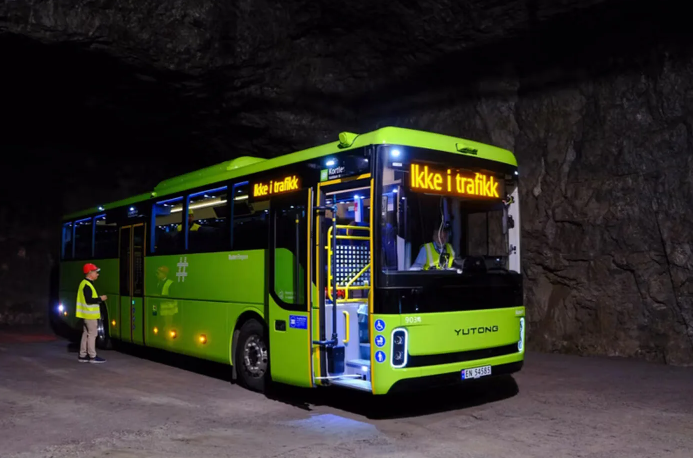
Norway’s expanding electric bus fleet is emblematic of a wider European reliance on international suppliers, especially for advanced, low-emissions vehicles. Of roughly 1,300 electric buses now running in Norway, about 850 are built by Yutong—with hundreds serving the bustling routes of Oslo and its environs.
The troubling discovery doesn’t signal immediate danger—Ruter maintains that the likelihood of a coordinated shutdown remains minimal. However, it has reignited debates about security, transparency, and public trust in a world where mobility and infrastructure are seamlessly connected yet globally sourced.
By physically disconnecting vulnerable vehicles from foreign networks, Norwegian authorities hope to show that technological progress does not have to come at the expense of national safety. The situation serves as a critical reminder: as cities get smarter, so too must the layers of defense that keep them moving.